PostgreSQL Monitoring
PulseOps monitors PostgreSQL infrastructure to provide visibility into database availability, performance, and operational reliability.
Monitor connections, replication, performance, and availability in real time.
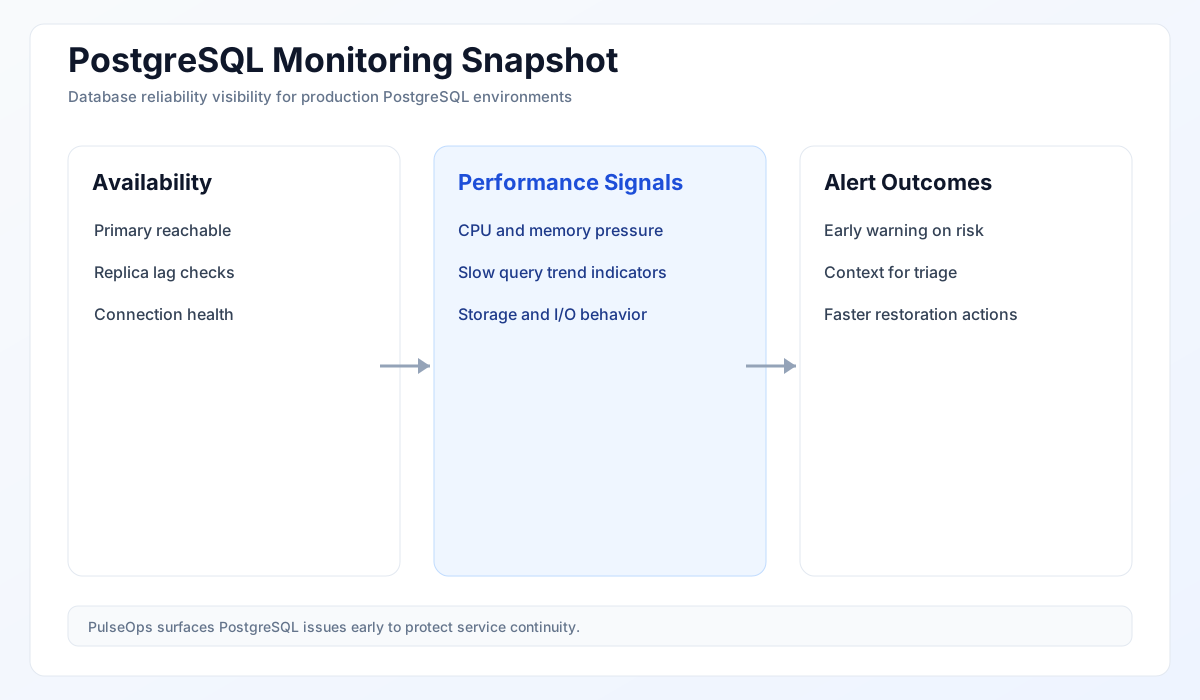
What is monitored
Connections
Active sessions, connection pressure, and saturation risk on database endpoints.
Locks
Lock contention signals that can block transactions and slow write throughput.
Replication Lag
Primary-to-replica delay to detect failover and read-consistency risk early.
Query Performance
Query latency and execution behavior trends that indicate degrading performance.
Disk Usage
Storage utilization growth and space exhaustion signals on database hosts.
Common issues detected
High CPU on DB Host
Sustained CPU pressure affecting transaction response times.
Slow Query Spikes
Latency increases from expensive queries or blocked operations.
Replication Delay
Replica lag creating stale read and failover recovery concerns.
Disk Near Full
Storage pressure that can lead to write failures and downtime.
Why it matters
PostgreSQL performance and availability directly affect application response time, transaction reliability, and user experience during peak load.
How PulseOps helps
PulseOps surfaces PostgreSQL risk conditions quickly so teams can triage bottlenecks, prevent outages, and stabilize database operations before business impact grows.
Start Monitoring
Start monitoring this stack with clear reliability and incident visibility.