Infrastructure Monitoring Platform for Operations Teams to Improve Reliability
PulseOps gives operations teams one platform to monitor infrastructure, manage incidents, and improve uptime with clear reporting.
Designed for simplicity — deploy in minutes, start monitoring immediately.
How the Platform Works
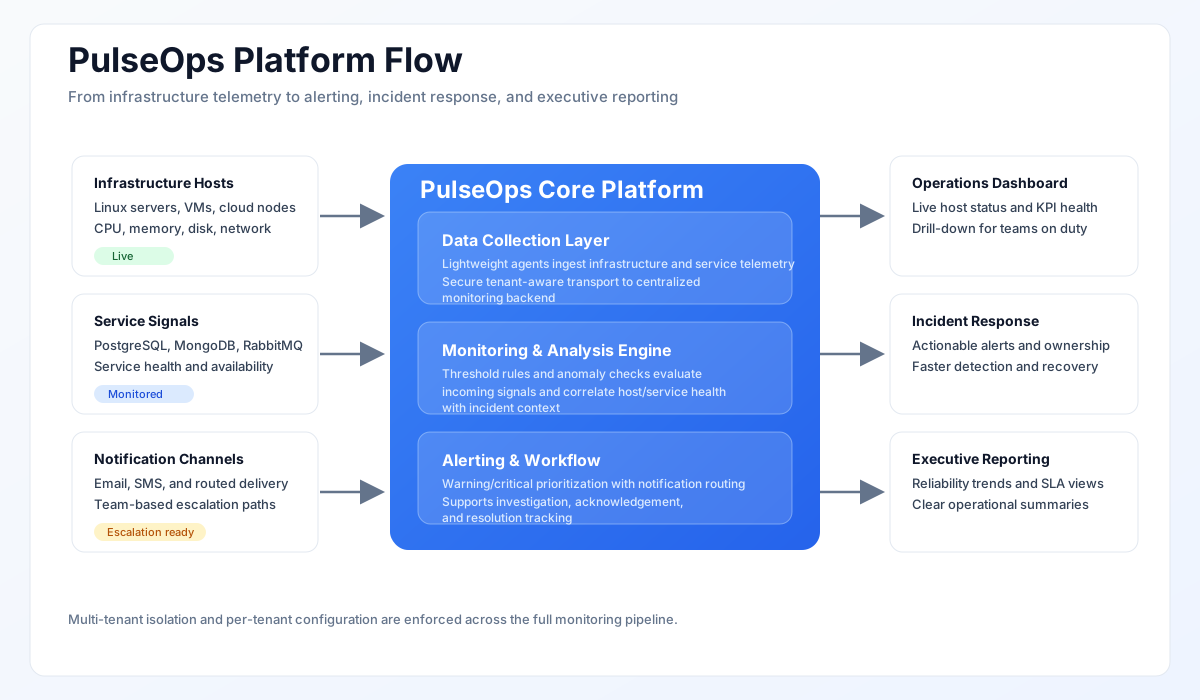
PulseOps follows a clear operational pipeline from collection to decision support.
Agent data collection starts on each monitored host where telemetry is captured continuously. Collected data is sent through ingestion services that standardize host and service signals for processing.
Processing evaluates incoming metrics, applies thresholds, and determines severity. Alerts are created when conditions are met, then linked to incidents for acknowledgement, investigation, and resolution tracking.
The same operational record powers dashboards and reporting outputs, so teams and leadership work from consistent reliability data over time.
Core Modules
Each module has a clear role in day-to-day infrastructure operations.
Monitoring
What it does: Collects host and service telemetry across infrastructure. Why it matters: Gives teams continuous operational state instead of point-in-time checks.
Alerting
What it does: Applies threshold logic and triggers prioritized alerts. Why it matters: Reduces detection lag and directs attention to the most urgent issues first.
Incident Lifecycle
What it does: Tracks incidents from trigger through resolution state. Why it matters: Preserves operational accountability and improves consistency during response.
Reporting / SLA / Executive
What it does: Produces trend, reliability, and SLA-oriented outputs. Why it matters: Enables technical and business stakeholders to align on operational performance.
Alert lifecycle
Clear stages from signal detection to closure.
Detection
Metrics and service signals are evaluated continuously for abnormal conditions.
Trigger
Threshold conditions create an alert event with severity and service context.
Notification
Alert events are routed to the relevant team channels for rapid response.
Acknowledgement
Responders confirm ownership and begin active investigation on the incident.
Resolution
Incident state is updated to resolved with traceable closure context.
Reporting & Operational Intelligence
Operational data is transformed into decision-ready reliability insight.
SLA Tracking
Measure service performance against reliability targets and identify where commitments are at risk.
Executive Reports
Provide concise summaries of incident activity, reliability posture, and operational trends for leadership.
Trends Over Time
Use historical patterns to evaluate recurring issues, improve response process, and guide planning decisions.
Start Monitoring
Start monitoring your environment with clear uptime and incident visibility.